Disclaimer: This page may contain affiliate links. I may earn a small commission if you book or purchase through them, at no extra cost to you. Please read my Privacy Policy for more information. Thank you!
If you’re planning your first trip to Japan and wondering whether Mount Fuji is worth visiting, and if two days is enough, the short answer is: yes!
That’s exactly how I felt on my first trip; excited, a little unsure what to do, and quietly hoping the clouds would clear just long enough to see Fujisan on my very first visit.
Spoiler alert: I actually saw a not-so-shy Mount Fuji the whole time I was there!
With the right plan, you can see its peaceful lakeside scenery, iconic red pagoda backdrop, soak in an onsen, and enjoy a hearty bowl of Hoto noodles without feeling rushed.
In this post, I’m sharing my exact Mount Fuji 2-day itinerary, including what I did, how to get around, and practical travel tips so you can skip common first-timer mistakes.
Day 1: Head Over to Fujiyoshida
- Visit Chureita Pagoda
- Explore Arakura Sengen Shrine
- Eat Hoto Noodles
Day 2: Explore Lake Kawaguchiko
- Cross Kawaguchiko Ohashi Bridge
- Visit Kawaguchiko Music Forest Museum
- Stroll Along Maple Corridor
- Visit Nagasaki Park
- Visit Oishi Park
- Enjoy The Fujisan Scenery at Ubuyagasaki Shrine
Extra note: If you’re still figuring out how Mount Fuji fits into your overall itinerary, my detailed Japan trip planning guide explains how to structure your route efficiently.
Day 1: Head Over to Fujiyoshida
So after you check in, head over to Fujiyoshida to visit Chureita Pagoda and Arakura Sengen Shrine.
Visit Chureita Pagoda
Chureito Pagoda is easily one of the most photographed spots in Japan.
And when you see it in person, you’ll get why.
Located inside Arakurayama Sengen Park, the classic red pagoda set against Mount Fuji is even more breathtaking when you’re standing right in front of it!
The photo platform does get crowded (even more so during spring), so expect a bit of a wait for your turn.

But getting up to the pagoda can be a bit of a climb. You can either walk up about 400 steps or take the sloped paved road.
If you don’t have mobility issues, I recommend taking the stairs up and coming down the road so you get to enjoy two different views.
Travel tip: The best time to photograph Mount Fuji is in the early morning, when the light is softer and the skies are usually clearer.
Explore Arakura Sengen Shrine
Most people head straight for the pagoda viewpoint and skip this shrine, but it’s worth stopping by for awhile.
Just before you start the climb to the pagoda, you’ll find Arakura Sengen Shrine on your left.

This unassuming shrine has been here for over 1300 years, making it one of the oldest spiritual spots around Mount Fuji!
Locals typically visit Arakura Sengen Shrine to pray for safe childbirth, family wellbeing and general protection.
You can also draw an omikuji (paper fortune) here if you want to try your luck.
If you get a bad one, just tie it to the rack nearby to leave the bad luck behind!
Eat Hoto Noodles
If there’s one dish you need to try while visiting Mount Fuji, it’s Hoto noodles.
Served bubbling in a cast iron pot, this local specialty features thick, flat noodles simmered in a miso-based broth with pumpkin, daikon, and other seasonal vegetables.

I had mine at Hoto Tempura Wakana since it was just a few minutes’ walk from Toyoko Inn Hotel.
I ordered the Hoto noodle and tempura set, and the portion was massive. If you’re not super hungry, it’s probably a good idea to split it with your travel buddy.
Here are some of the popular spots known for their Hoto noodles:
Travel tip: Make a reservation if you’re planning to go during dinner time. I didn’t and ended up waiting outside in the cold for 30 minutes on a winter night because the place was packed 🥶
How to Get to Fujiyoshida from Kawaguchiko Station
You can take the train from Kawaguchiko Station to Shimoyoshida Station, which takes about 15 minutes.
From there, it’s roughly a 10‑minute walk to Arakurayama Sengen Park, where Chureito Pagoda and Arakura Sengen Shrine are located.
Day 2: Explore Lake Kawaguchiko
On Day 2 of this Mount Fuji 2-day itinerary, it’s time to explore the spots and viewpoints around Lake Kawaguchiko.
This area gives you some of the best views of Mount Fuji from different angles, plus a laid-back lakeside vibe that’s perfect after yesterday’s adventurous climb.
To get around, you can either take the public sightseeing bus (Red Line) or cycle along the lake shore.
As for myself, I rented a bike for the day and ticked off all these places at my own pace. 🤩
It ended up being one of the main highlights of my 3‑week Japan itinerary!
Cross Kawaguchiko Ohashi Bridge
If you’re coming from Kawaguchiko Station direction, the first place you’ll come across is Kawaguchiko Ohashi Bridge.
There’s nothing particularly fancy about the bridge itself, but it offers a mesmerising, first unobstructed view of Mount Fuji-lake combo.

I didn’t even know you could see Fuji from here until I saw people stopped riding, pulling out their phones, and snapping photos 😅
Visit Kawaguchiko Music Forest Museum
Next up is Kawaguchiko Music Forest Museum, a cosy little spot that mixes music, lovely gardens, and stunning views of Fuji.
The European style-inspired museum houses antique music boxes and self-playing instruments from around the world, including giant organs and intricate mechanical pieces that still work.
They even do live demonstrations at set times, so you can actually hear them in action!
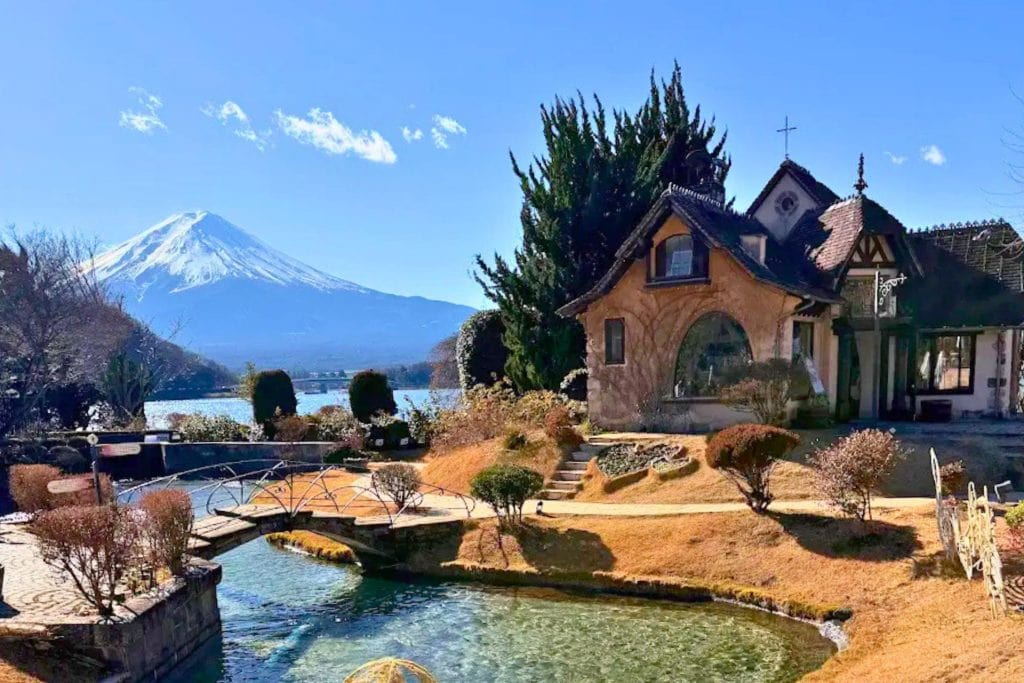

You can also find a beautiful rose garden with over 720 varieties of roses blooming across archways and flowerbeds.
It’s especially stunning in spring and early summer when everything’s in full bloom!
But even if you don’t visit during those seasons, the views are still gorgeous with Mount Fuji as the backdrop.
Stroll Along Maple Corridor
Maple Corridor is one of the best places around Lake Kawaguchiko to admire fiery autumn foliage, especially if you’re visiting between late October and mid‑November when the leaves turn red and gold.
The walkway is lined with around 60 mature maple trees along a short path by the lakeside, creating a corridor of color that makes for lovely photos and a peaceful stroll.

Even outside of autumn, this area still feels calm and scenic with Mount Fuji often visible in the distance!
Travel tip: If you walk to the end of the corridor, you’ll find the Itchiku Kubota Art Museum opposite the road. It’s a lovely addition to your itinerary if you’re interested in traditional textile art and kimono creations using the tsujigahana dyeing technique.
Visit Nagasaki Park
Out of all the viewpoints I visited during my 2-day Mount Fuji itinerary, Nagasaki Park might be the most underrated.
The view of Mount Fuji with Lake Kawaguchiko in front is just so stunning. The golden pampas grass made it even prettier, like a soft frame around the mountain!

You might even catch the sightseeing cruise passing by in the distance, which makes the view even more picturesque.
Travel tip: The road to get here is narrow, and there’s no proper parking. If you’re driving, you’ll need to park a little further away and walk in.
Visit Oishi Park
Oishi Park is a popular lakeside viewpoint that gives you a wide, open view of Mount Fuji, Lake Kawaguchiko, and seasonal flower displays all in one frame.
The scenery is especially mesmerising during bloom seasons:
- In spring, you’ll see tulips and other colorful wildflowers
- Early summer is all about the lavender fields
- In autumn, the area fills with cosmos flowers
- And in winter, while there aren’t many flowers blooming, the skies are often clearer so the view of Mount Fuji is even sharper


The park also has bathrooms and a couple of cafes, so it’s a good spot to rest and recharge after exploring the lake all day!
Travel tip: For the best photos, walk toward the lakeside promenade to get that Fuji, the lake, and the flower beds all in one shot. 😉
Enjoy The Fujisan Scenery at Ubuyagasaki Shrine
If you’re wrapping up your day and still want one last look at Mount Fuji, Ubuyagasaki Shrine makes a quiet, scenic final stop.
It’s a small Shinto shrine located right by the shore at Ubuyagasaki Cape, and from here you can overlook Lake Kawaguchiko with Mount Fuji in the background.
Additional Spots to Add Into Your Mount Fuji 2-Day Itinerary
If you’ve got extra time, energy, or just want to swap out a few things to do in Mount Fuji, here are a few more places you can easily add to your Mount Fuji itinerary:
- Mt. Fuji Panoramic Ropeway
For those who love an easy viewpoint, take the ropeway up to Mt. Tenjo for sweeping views of Lake Kawaguchiko and Fuji behind it. It’s touristy, but still worth it for the photos.
- Narusawa Ice Cave
For something completely different, you can visit the Narusawa Ice Cave. Inside the cave, temperatures stay low year‑round and you’ll see stunning ice pillars and formations!

- Lake Shoji or Lake Saiko
If you want more water + Fuji views, consider a short detour to nearby Lake Shoji or Lake Saiko. These quieter lakes still offer classic Fuji scenery and a more relaxed vibe compared to Kawaguchiko.
3 Things I Wish I Knew Before My First Mount Fuji Trip
Mount Fuji looks simple on the map, but planning a trip here was more confusing than I thought.
Here’s what I’ve learned; so you don’t have to figure it out the hard way:
Mount Fuji Is HUGE
To be honest, I always thought Mount Fuji was one place where all the popular spots were close together and easy to see in a day 😅
I didn’t realize how wrong I was until I started planning as a first‑time traveler!
The area most visitors focus on is the Fuji Five Lakes region, a scenic area around the northern base of Mount Fuji made up of five separate lakes:
- Lake Kawaguchiko,
- Lake Yamanakako,
- Lake Shojiko,
- Lake Saiko, and
- Lake Motosuko.
These lakes, the viewpoints, parks, and attractions around them are so spread out.
Some places are easy to get to on foot, others are a short bike ride away, and a few are best reached by car or bus.
So if you’re doing a 2‑day Mount Fuji itinerary, it’s worth mapping your route in advance so you don’t waste time zig‑zagging across the area.
Daylight Hours Vary by Season
One thing I didn’t think about at first was how short the daylight can be outside of summer.
In autumn and winter, it can start getting dark around 4.30 pm, which doesn’t leave much time if you start out late.
In spring, sunset is typically around 5.30 pm.
In summer, daylight lasts the longest, which is usually into the 6.30 pm to 7 pm range.
So if you’re visiting in autumn or winter, I recommend starting early to make the most of your day and not feel rushed.
Also, if photographing Mount Fuji is on your list, keep in mind that mornings usually offer the clearest views!
Travel tip: If you’re visiting in autumn or winter, check out what to pack for fall or bring in winter to stay warm while exploring the region.
Public Buses Don’t Run Late
If you’re relying on public buses to get around the Mount Fuji area, one thing to note is that they don’t run late into the evening, especially compared to cities like Tokyo or Osaka.

Most sightseeing and local buses around Lake Kawaguchiko finish their routes by 6.50 pm, and in some seasons, even earlier.
I learned this the hard way when I planned to have Hoto noodle dinner at KANJYUKUYA but I didn’t check the timetable properly.
The last bus was at 6.12 pm, and by the time I arrived, I basically had to turn right back around to catch it as I didn’t want to risk walking back alone in the dark.
In the end, I had my dinner at Hoto Tempura Wakana, which was closer to my hotel.
It wasn’t the end of the world, but it did cost me time (and bus fare money) that I could’ve saved by checking the timetable beforehand.
So if you’re heading somewhere a little out of the way for dinner, always double-check the last bus timing before you go, especially during the colder months when everything gets quiet early.
Where to Stay Near Mount Fuji
There are plenty of accommodation options around Mount Fuji, especially near Lake Kawaguchiko.
So whether you’re on a budget, traveling mid-range, or looking to splurge a little, here are some options to consider:
Budget: Kawaguchiko Hotel, Toyoko Inn (I stayed here and I loved it!)
Mid-range: La Vista Fuji Kawaguchiko, Mizno Hotel
Higher-end: Konanso, FuFu Kawaguchiko
Staying at an onsen ryokan is also a popular choice, especially if you want to unwind in a hot spring bath while taking in the view of Fujisan.
I’ve written a full guide on the best Mount Fuji ryokan with private onsen, where you can compare options and pick one that suits your style!
Getting Around Mount Fuji: Bus, Bike, or Car?
By Sightseeing Bus
The easiest way to get around Mount Fuji without a car is by using the sightseeing buses that run from Kawaguchiko Station.

These bus lines(red, green and blue) connect all the major attraction spots within the area and run in loops throughout the day.
- Red Line
The most popular line for first-time visitors. It loops around Lake Kawaguchiko and stops at must-see places like Kawaguchiko Music Forest Museum, Oishi Park, Mt. Fuji Ropeway, and more.
- Green Line
Takes you out toward Lake Saiko and other quieter nature spots west of Kawaguchiko. It’s a good option if you want to explore beyond the main loop.
- Blue Line
Goes even further, connecting Lake Shojiko and Lake Motosuko. These are the more remote Fuji Five Lakes, and this line runs less frequently so make sure to check the schedule.
Since you’ll most likely be using the bus several times over two days, it makes the most sense to get the Fujikyu Bus Unlimited Ride Pass.
It’ll save you both time and money!
- 1-Day Pass: ¥1500 ($10)
- 2-Day Pass: ¥2000 ($13)
This pass covers the Red, Green, and Blue lines.
But if you also plan to take the Fujikyu Railway from Otsuki to Kawaguchiko, or want to include extra spots like the Mt. Fuji Panoramic Ropeway, the Mt. Fuji Pass might be a better choice.
This pass includes:
- Unlimited rides on the Red, Green, and Blue sightseeing buses
- Fujikyu Railway (between Otsuki and Kawaguchiko and Kawaguchiko and Shimoyoshida)
- Mt. Fuji Ropeway access
- Discounts at selected attractions, shops, and restaurants around the Fuji Five Lakes
Best for: Solo travelers, couples, and anyone who wants a budget-friendly and straightforward way to explore Kawaguchiko’s main attractions without renting a car or bike.
By Rental Bike
If you prefer exploring at your own pace and like the freedom of stopping whenever you want, renting a bike is one of the best ways to get around.
There are plenty of rental bike shops around Kawaguchiko Station and near the lake, making it easy to pick one up in the morning and ride for the whole day.
Most rental shops offer electric bikes too, so you can still make it to farther spots without feeling exhausted!
I got a regular bike from Fujisanbike and honestly had a blast cycling around the lake during my 2‑day stay.
If you’re considering biking, I shared my Lake Kawaguchiko cycling route with scenic stops and tips to make the most of the ride!

Typical rental prices (varies by shop):
- Regular bike: Around ¥1500–¥2500 ($10-$16) per day
- Electric bike: Around ¥3000–¥4000 ($19-$26) per day
Best for: Solo travelers, couples, and anyone who likes flexibility without relying on a timetable.
By Car
If you’re traveling with family, a group of friends, or just want to reach spots that are a bit out of the way, renting a car makes things a whole lot easier.
Attractions like Lake Motosuko, Wind Cave, or Ice Cave aren’t super accessible by bus, so having a car gives you more flexibility, especially if you’re only here for a short time.
Driving around Mount Fuji is pretty straightforward. The roads are well-paved and signs are in English. Just be ready for some traffic if you’re visiting during peak seasons like spring or autumn.
Most attraction sites have parking, and many hotels or ryokans provide free parking for guests too.
If you’re considering renting a car, Discover Cars is a well-reviewed platform that compares rental options across Japan.
I haven’t personally driven in Japan, but I’ve heard good things from other travelers who found it easy to use and fairly priced.
Travel tip: You’ll need an International Driving Permit (IDP) to rent a car in Japan. Also, request an ETC card if you’re driving from Tokyo to make tolls quicker and easier.
Best for: Families, small groups, or anyone planning to visit remote spots around Mount Fuji.
How To Get To Mount Fuji From Tokyo
Depending on your budget and plan, you can either board the train or highway bus to get to Mount Fuji from Tokyo.
By Train
The easiest option is the Fuji Excursion Limited Express, a direct train from Shinjuku Station to Kawaguchiko Station.

The ride takes around 1 hour 50 minutes with no transfers, and the views are lovely along the way.
It also stops at Shimoyoshida Station, which is super convenient if you’re planning to visit Chureito Pagoda.
- Ticket price: From ¥4000 ($27) one-way for reserved seating
You can buy tickets at major JR stations, or book online fuss-free via Klook!
I’ve found Klook handy for reserving seats ahead of time, especially during busy travel seasons when seats can sold out fast!
It would be great to book at least 2 to 3 weeks earlier once your travel date is fixed.
By Highway Bus
If train tickets are sold out or you prefer a slightly cheaper option, the highway bus is a great alternative.
You can catch the bus from the Shinjuku Expressway Bus Terminal and ride it straight to Kawaguchiko Station.
The ride is comfortable and takes about 1 hour 45 minutes to 2 hours, depending on traffic.
- Ticket price: Around ¥2,200 ($14) one way
You can buy the ticket online via Highwaybus.com, Klook, or purchase tickets at the terminal counter directly.
There are also buses that depart from Shibuya, but it’s a longer journey (around 2.5 hours) since it makes additional stops, including Fuji-Q Highland and other places along the way.
Travel tip: Try to stay near Shinjuku Station the night before your Mount Fuji trip for convenience and to avoid long morning commutes.
I stayed in Asakusa and spent nearly 1.5 hours just getting to the bus terminal, even though Google Maps said it would only take 45 minutes.
You can read the more detailed guide on getting to Mount Fuji from Tokyo before finalizing your trip 😉
FAQs: Mount Fuji Itinerary for 2 Days
Is Mount Fuji worth visiting if you’re not climbing it?
Absolutely yes. Most visitors don’t climb it! The lakes, viewpoints, seasonal flowers, food, and onsen experiences make it worth the trip.
How many days do you need in Mt. Fuji?
At least 2 days if you want to explore at a relaxed pace. This gives you time to enjoy the iconic views, soak in the atmosphere, and not feel rushed.

What to do in Mt. Fuji for 2 days?
Plenty! Here’s a sample of what you can fit in:
Visit Chureita Pagoda
Explore Arakura Sengen Shrine
Eat Hoto Noodles
Cross Kawaguchiko Ohashi Bridge
Visit Kawaguchiko Music Forest Museum
Stroll Along Maple Corridor
Visit Nagasaki Park
Visit Oishi Park
Enjoy The Fujisan Scenery at Ubuyagasaki Shrine
What month is best to see Mount Fuji?
December to February. That’s when the skies are clearest, and that means the best chances to see Mount Fuji without clouds blocking the view.
What are the best photo spots of Mount Fuji?
Some of the top picks include:
Chureito Pagoda
Nagasaki Park
Oishi Park
Ubuyagasaki Shrine
Kawaguchiko Ohashi Bridge
Do you need to rent a car to explore Mount Fuji?
Not necessarily. The sightseeing bus and rental bikes make it easy to get around if you stay near Lake Kawaguchiko. But a car is helpful if you’re visiting further-out spots like Lake Motosuko and Wind Cave.
Final Thoughts: Yes, 2 Days at Mount Fuji Is Totally Worth It
While many people squeeze Mount Fuji into a quick day trip from Tokyo, I’m really glad I gave it two full days.
You get to slow down, enjoy the peaceful scenery, and actually soak in what makes this place special, instead of just rushing from one photo spot to the next!
I didn’t expect to love this area as much as I did, but between the chill vibes and that surreal Fuji view, it’s one of the few places I’d return to again.
If you’ve been on the fence about staying overnight, I hope this 2-day itinerary shows just how worth it the extra time can be!
Planning more stops around the country? Don’t miss my other Japan travel guides; from full itineraries to local food tips and hidden gems:
- Where to Stay at Mount Fuji: Best Areas, Hotels & Ryokans
- Tokyo Bucket List: 28 Epic Experiences You Won’t Want to Miss
- 27 Osaka Bucket List Ideas for First Time Traveler
- 11 Best Hotels in Kyoto For First-Time Traveller (Quick Pros +Cons!)
- Best Kyoto 3-Day Itinerary for First-time Travelers
- 19 Best Kyoto Ryokan With Private Onsen

Sam Lee is the founder of Sam Lee Travel, where she helps first-time travellers plan smoother trips to Japan and across Asia.
Based between Malaysia and Singapore, Sam has spent years exploring the region, from popular cities to off-the-beaten-track places that often get raised eyebrows.
Her approach focuses on practical travel tips, realistic planning, and sharing real, unfiltered experiences, so travellers can enjoy their trips without overpacking their days or wasting time on messy routes.
Over 250K travellers have used her guides to plan their trips!