Disclaimer: This page may contain affiliate links. I may earn a small commission if you book or purchase through them, at no extra cost to you. Please read my Privacy Policy for more information. Thank you!
Planning your first trip to Japan can feel weirdly high-pressure.
Well I still remember being confused + annoyed looking at the guides on the internet where everyone seemed to have completely different advice.
One person online is telling you to reserve every restaurant three months in advance.
Another says your trip will collapse into chaos somewhere inside Shinjuku Station unless you master Japan’s train system beforehand.
After spending 5 weeks traveling across Japan through multiple seasons, I realised that you do not really need to know everything about Japan to have an incredible trip!
Yes, giant stations like Shinjuku can feel chaotic at first. But it’s not the end of the world if you spend 10 minutes walking in circles before finally finding the right exit.
And no, you probably don’t need to turn every day into a 20K-step itinerary just because some random TikTok video told you to.
But honestly, most Japan travel mistakes come from trying too hard to have the “perfect” trip.
So here are the things I genuinely think are worth knowing before your first trip to Japan, including a few that I rarely see mentioned in other travel guides!
Planning Mistakes
1. Trying to Visit Too Many Cities or Towns
One of the biggest Japan itinerary mistakes first-time travelers make is trying to turn one trip into an attempt to “complete” the entire country.
Well, I totally understand the temptation.
Flights to Japan are expensive, there’s endless advice online about lesser-known places, and social media somehow makes it look normal to visit Tokyo, Kyoto, Osaka, Nara, Hakone, Hiroshima, and Mount Fuji in a single week without collapsing from exhaustion.
But honestly? Japan is one of those places that becomes way more enjoyable when you slow down a little.
For most first-time visitors, I think 2 or 3 base cities is the sweet spot for a 10 to 14 day trip.


Once you start adding too many destinations, the trip can turn into:
- a cycle of packing luggage,
- navigating giant train stations,
- hauling suitcases through crowds,
- and figuring out which station exit gets you closest to your hotel so you do not accidentally drag your suitcase an extra 15 minutes in the wrong direction.
Some of my favourite moments in Japan happened when I stopped trying to optimize every second and just enjoyed where I already was, instead of treating every extra town or city added to my itinerary like some kind of travel badge of honour.
Like spending an extra hour in a cafe or wandering through the quiet streets of Shimokitazawa instead of forcing myself to squeeze in another day trip to Nikko from Tokyo?
Oh yes please!
2. Overplanning Every Day
Another common Japan travel mistake is overplanning every single day of the trip.
*Me looking away and smiling sheepishly to myself as I typed the above sentence
A lot of online itineraries cram in so many highlights that you would realistically need to sprint like mad to see everything.
The idea behind this is dangerously simple: I’m here so I might as well 😅
I’m here in Kyoto, so I might as well visit 15 temples in Higashiyama, explore Arashiyama and all the hidden gems, try the Instagram-famous matcha parfait in Uji, book a tea ceremony, do a Nishiki Market food tour, and squeeze in a kimono photoshoot across multiple locations, all within 3 days.

At some point, trips like this start becoming more about rushing between attractions than actually noticing where you are.
Like how massive the gate at Chionin Temple looks as you walk through it, how unreal the autumn colours look with the mountains in the background, or how surprisingly chill some neighbourhoods feel once you step away from the main tourist areas.


Some of my favourite moments that I had in Japan happened when I slowed down a little, and even skip things, instead of trying to check off everything I originally planned to do!
💬 Need a Second Opinion on Your Itinerary?
If you’re currently staring at a Google Doc, spreadsheet, or 37 browser tabs trying to piece together your Japan itinerary, you’re not alone 😂
Join my free, private Facebook group called Japan Travel Made Easy for First-Time Travelers where you can ask questions, get itinerary feedback, and learn from other travellers planning their own trips too!
Travel tip: Here are some Kyoto itineraries that I wrote if you need some ideas how to plan yours:
3. Not Checking Seasonal Daylight Hours
This is one of those oddly specific travel mistakes that barely anyone talks about online.
One thing I wish I knew before traveling to Japan in November was how early the sun sets during autumn and winter.
By around 4.30 pm to 5 pm, the sun was already disappearing which made sightseeing days way shorter.
I genuinely thought there was something wrong with my phone clock until I checked online and realised sunset really was that early 👀
It is not necessarily a bad thing, but it definitely changed how I planned my days afterwards.
Tokyo was fine since there were still plenty of things to do at night and the city is incredibly well-lit anyway.
But when I was at Lake Kawaguchiko, I returned my rental bike before sunset instead of continuing to cycle around the poorly lit roads near the lake, then had an early dinner and called it a day.


So if you are visiting Japan during autumn or winter, I 100% recommend checking sunrise and sunset times before finalising your itinerary, especially if you are planning outdoor sightseeing, temple-hopping, taking scenery photos, or exploring smaller towns!
4. Assuming You Can Book Everything Last Minute
Japan travel advice online tends to swing between two extremes.
Either people act like you need to reserve every meal three months in advance, or they insist you can completely wing the entire trip without booking anything.
Well, the reality is somewhere in the middle.
Most casual restaurants, ramen shops, izakayas, and everyday cafes are completely fine without reservations.
But there are still a handful of attractions, restaurants, or even train tickets that book out surprisingly fast, even during non-peak seasons.
To be honest, I’ve always been on team “wing it” until I realised the Fuji Excursion train I wanted to take was already sold out 1 week earlier, so I ended up taking the bus instead 😅

Things like teamLab Planets, themed cafes, highly rated omakase restaurants, and some ryokans are definitely worth planning ahead for if missing out on them would disappoint you.
If you are wondering what you actually need to reserve before your trip, you can check out my full article on the things you should book in advance for Japan!
5. Overpacking
The dangerous thing about planning for Japan is convincing yourself you need a different outfit for every city to look chic 😅
That was basically me during my recent Japan trip.
After my first trip, I structured my 2nd trip itinerary around a “base” strategy where I stayed in one city for a few days while sending my larger luggage ahead to the next destination using takkyubin.
For example, I sent my bigger luggage from Tokyo straight to Kyoto and Takayama so I could explore the cities in between like Mount Fuji, Osaka, and Kanazawa first with only a smaller suitcase.
This strategy itself worked great, but the problem was I still brought too many clothes in the first place (proof ⬇️)


By the end of the trip, there were still outfits I never even touched because I kept using hotel laundry services and rewearing the same few clothes anyway.
I probably would have struggled way less moving through train stations or dragging luggage across icy roads at Hirayu Onsen if I had simply packed less from the start…
Travel tip: If you are still planning what to pack, I also shared my Japan packing lists for autumn, winter, and summer trips so you know what you can probably leave behind.
Transportation Mistakes
6. Buying the JR Pass Automatically
For years, the JR Pass used to be one of those “must-buy” Japan travel recommendations that appeared in almost every itinerary guide online.
So naturally, a lot of first-time visitors still assume they should automatically get one.
But after the major JR Pass price increase, it honestly no longer makes sense for as many travelers as it used to.

If your trip mainly focuses on popular routes like Tokyo, Kyoto, and Osaka, there is a very good chance you might not actually save money with a nationwide JR Pass anymore, especially once you run your itinerary through a JR Pass calculator.
Even during my recent 3-week Japan trip, I managed to travel without a JR Pass despite visiting 6 cities and doing 4 different day trips.
But this doesn’t mean JR Pass is the thing of the past.
Recently, I also came across one chaotic-but-genius cherry blossom itinerary where someone basically traveled across the country with a 14-day JR Pass just to chase peak sakura season from city to city!
So yes, the JR Pass can still absolutely be worth it for certain trips, just probably not in the automatic way many older travel guides still suggest.
7. Underestimating Japan’s Train Stations
Arriving at your station in Japan does not necessarily mean you are actually “there” yet.
Sometimes you still need another 10 to 15 minutes just to walk from your platform to the actual street.
And to be frank, the trains themselves are usually not the confusing part.
The real challenge is figuring out where exactly you need to go once you arrive.
Some stations are absolutely massive with multiple train lines, endless exits, underground shopping areas, and crowds moving in every direction at once.
I still remember spending 10 minutes walking in circles inside Shinjuku Station trying to find the correct exit while Google Maps kept rerouting 😅
This might sound silly, but the trick I used with about a 90% success rate was just randomly picking someone and following them, hoping they were also walking toward street level.
The other 10%? I ended up even further underground lol
After this incident, I also learned it’s best to stop planning train transfers too tightly and give myself more buffer time whenever I was navigating bigger stations!
8. Not Leaving Enough Time for Transfers
Running through Toyama Station trying to catch my connecting train to Takayama while dragging luggage behind me was probably not how I imagined my relaxing Japan trip would go.
Personally I thought the 7-minute transfer looked completely doable and reasonable, especially when you think you’re young.
But some of Japan’s train stations can be suuuuper huge, and once you factor in crowds, finding the correct platform, and hauling luggage down staircases, that 7-minute buffer suddenly does not feel like much anymore.
So technically, yes, I made to the train.
Emotionally? I think my soul was still sprinting across the platform five minutes later.


After that I realised there were actually dozens of JR Hokuriku Shinkansen departures every day from Kanazawa to Toyama, which meant I could have easily taken an earlier train, chilled at Toyama Station for a bit, then boarded the next JR Hida Limited Express to Takayama 😅
So give yourself way more buffer time between transfers whenever possible, especially in larger stations or when traveling with luggage.
Missing one train in Japan is usually not the end of the world anyway, and personally, I would much rather grab a coffee or ekiben calmly than having every transfer like an Olympic event.
Japan Etiquette Mistakes
9. Stressing Too Much About Etiquette
A lot of “what not to do in Japan” advice online makes Japan etiquette feel way scarier than it actually is.
Before my trip, I kept seeing so many videos warning people not to do the “wrong” thing in Japan that it almost felt like I needed to revise for an exam before boarding the flight.
Do not talk loudly on trains. Do not eat while walking. Do not stand on the wrong side of the escalator. Do not mess up shrine etiquette.
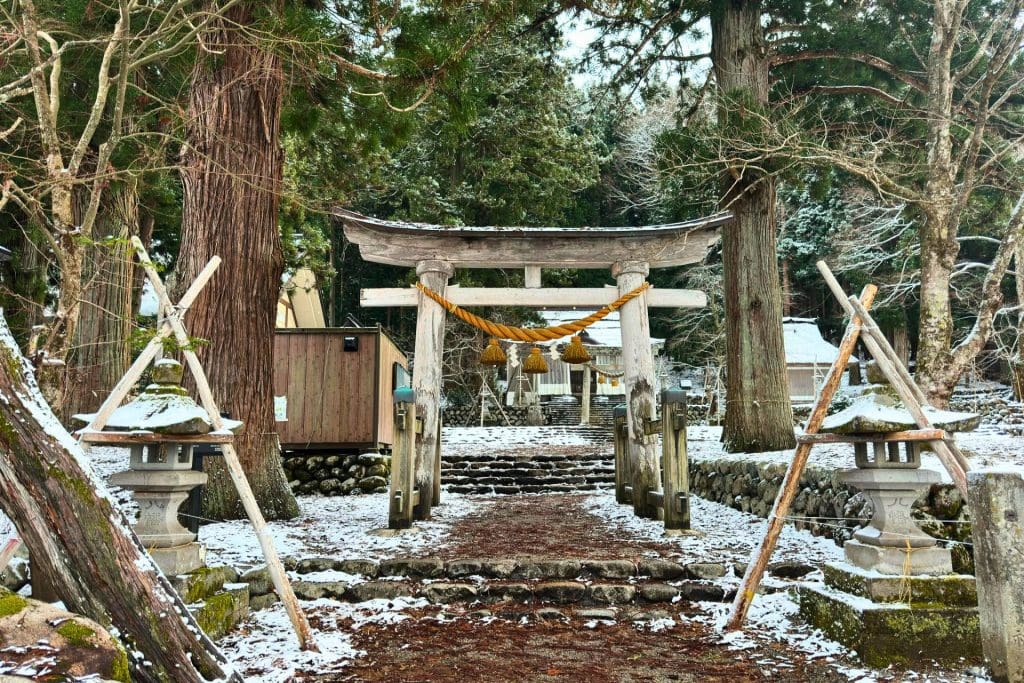
And yes, basic politeness absolutely matters in Japan.
But after actually traveling around the country, I realised most of the stress I had about etiquette was completely unnecessary.
Most Japanese people can already tell immediately that you are a tourist, and realistically, nobody expects you to magically understand every unspoken social rule perfectly.
As long as you are quiet on public transport, respectful at temples, and generally aware of your surroundings, you are probably already doing fine.
Just do not be obnoxious and you are already ahead of a surprising number of tourists!
10. Being Too Loud on Public Transport
One thing that I noticed pretty quickly in Japan was how quiet public transport was even during peak rush hours, compared to MRT rides back home in Singapore.
It is not like trains in Singapore are especially noisy either, but I was kind of surprised by how little noise there was beyond the sound of the train moving and the station announcements overhead.
People still talk on trains sometimes, so it is not like speaking is completely forbidden or anything. But conversations were usually pretty soft, and phone calls on trains felt almost nonexistent.

You definitely do not need to whisper throughout your entire Japan trip, but being mindful of your volume on public transport goes a long way.
Put on your earpiece if you want to watch IG reels while passing time, but if you really need to make a call, it’s probably better to stop at the next station first and simply catch the next train once you are done.
11. Treating Temples and Shrines Like Tourist Attractions
Japan has a lot of beautiful temples and shrines, but after visiting enough of them, you also start seeing how differently people behave inside these spaces.
Some visitors quietly walk around, pause to admire the architecture, or sit down for a while.
While some turn the entire place into a full photoshoot production with tripods, loud conversations, and complete spatial awareness loss while blocking pathways for everyone else 🙄
I started to see some popular temples like Ginkakuji putting up signs banning tripods on their grounds.

Credit: Ginkaku-ji
It was kind of a bummer for solo travelers, but at the same time I could completely understand why those rules became necessary.
So while you definitely do not need to know every single shrine or temple custom perfectly before visiting, at the very least just remember that people still come here to pray or worship to keep the space respectful for everyone.
12. Expecting English Everywhere
In bigger cities like Tokyo or Osaka, getting around was usually pretty manageable since train stations, tourist attractions, and many chain restaurants had English support.
But the further I got from major tourist areas like Hirayu Onsen and Narai-juku, the more I started relying on Google Translate, pointing at things, and literally hoping for the best.

Some conversations basically turned into both sides throwing single English words, simple Japanese phrases, and hand gestures at each other until something finally “clicked”! 😂
You do not need fluent Japanese before visiting, but learning a few basic phrases and downloading Google Translate beforehand makes daily travel much less awkward and anxious.
Food & Money Mistakes
13. Assuming Japan Is Fully Cashless
For a country that feels so futuristic in many ways, Japan can still be surprisingly cash-reliant at times.
In bigger cities like Tokyo or Osaka, I managed to pay with my credit card or IC card pretty often.
But once I started visiting smaller towns, local restaurants, temples, or countryside areas, cash was still very much part of daily life.
I still remember confidently trying to pay for a train ticket in Narai-juku with my card while the elderly station staff politely shook his head and said, “Cash only.”

Japan is definitely becoming more cashless compared to before, but I would not rely entirely on cards for the whole trip yet!
14. Not Trying Smaller Local Restaurants
Some of my favourite meals in Japan happened completely by accident.
Not the viral TikTok spots with 2-hour queues or the restaurants everyone on YouTube keeps recommending.
Just random tiny ramen shops, basement izakayas, or small family-run places I walked into because my feet hurt and I was too hungry to keep searching for “the best” restaurant nearby 😅
There was this tsukemen place in Kyoto that I went to during my first trip; it was so good that I even dreamt of that hot bowl of dipped ramen on that very night 🤤
Or this small cafe run by an elderly couple in Takayama that I randomly stumbled into. Even with limited English, I had a great time chatting with them over the best prawn curry rice!
The common thing both places had? They were filled almost entirely with locals.

Unless you really, really want to try that particular viral restaurant or food spot, I honestly suggest giving smaller local places a chance to surprise you.
Travel tip: You can also download the app Tabelog to check out local food recommendations. The English version makes it pretty easy to search and filter restaurants too.
15. Ordering Food Without Knowing What You’re Getting
I once ordered Hida beef sushi in Takayama Old Town since it was one of the local specialities.
Little did I know that the beef was only lightly seared with the red juices still visible. (I’m not a steak lover 🤢).
While everyone around me was praising the sushi, I sat on a small stool inside the shop staring at it for a solid 5 minutes trying to summon enough courage to eat it.

Safe to say, I did not enjoy the sushi, but that experience did make me realize something about food in Japan.
Sometimes a dish is not bad or “wrong” just because it tastes different from what you are used to back home.
Like I also remember reading someone online complaining that their ramen noodles in Osaka tasted undercooked, only for the comments to point out that they had accidentally gone into a Hakata-style ramen shop where the noodles are intentionally firmer and taste.. undercooked 😅
A lot of regional food in Japan just has its own style, texture, or way of being prepared, so I suggest quickly checking online what a dish is supposed to taste or look like beforehand.
And if it doesn’t look like something that you would want to eat, skip it and look for other options!
FAQs: Travel Regrets in Japan
What is the biggest mistake first-time travelers make in Japan?
Trying to do too much in one trip is probably one of the most common mistakes. Many first-time visitors underestimate how tiring constant train transfers, hotel changes, and packed itineraries can become in Japan.
Is Japan difficult for first-time travelers?
Honestly, Japan is probably much easier to travel around than many first-time visitors expect. Public transport is incredibly efficient, cities generally feel very safe, and Google Translate helps a lot once you leave major tourist areas. The biggest challenge is usually not the language itself, but trying too hard to optimize every part of the trip perfectly.
Is 7 days enough for Japan?
Yes, but it is usually better to focus on fewer cities instead of trying to squeeze the entire country into one week. Tokyo, Kyoto, and Osaka alone can easily fill a 7 to 10 day itinerary.

Do I need to book everything in advance for Japan?
Not everything. Most casual restaurants and daily activities can still be done spontaneously, but popular attractions, themed cafes, seasonal activities, and certain restaurants are worth booking earlier.
Is Japan easy for English-speaking tourists?
Major cities like Tokyo and Osaka are generally manageable for English-speaking travelers, but Google Translate becomes extremely useful once you move outside tourist-heavy areas.
How much cash should I carry in Japan?
Japan is becoming more cashless, but many smaller restaurants, temples, local shops, and countryside areas still prefer cash. Carrying some yen daily is still a good idea.
Is it difficult to travel around Japan with large luggage?
It can be tiring, especially with multi-city trips involving train stations, staircases, and crowded streets. Many travelers use takkyubin luggage forwarding services to make moving between cities easier.

The Best Advice I’d Give First-Time Japan Travelers
If there’s one thing I wish I knew before traveling to Japan for the first time, it’s that the trip becomes much more enjoyable once you stop trying to optimize every single part of it perfectly.
Yes, there are some things worth planning ahead for.
Popular restaurants, certain attractions, seasonal activities, luggage strategy, or understanding how transport works can make the trip smoother.
But at the same time, not every hour needs to be scheduled.
And not every city needs to be squeezed into one itinerary just to feel like you “maximised” the trip.
Half the time, the moments I remember most were completely random anyway.
Walking into a tiny ramen shop because my legs gave up.
Missing the wrong train exit and stumbling into a quiet neighbourhood.
Or spending longer at a cafe simply because I could not be bothered rushing to the next attraction anymore.
I think the sweet spot for Japan is knowing the important things beforehand while still leaving enough room for the trip to surprise you a little.
Planning Your First Japan Trip?
Here are some of the popular + helpful guides to read when planning your trip:

Sam Lee is the founder of Sam Lee Travel, where she helps first-time travellers plan smoother trips to Japan and across Asia.
Based between Malaysia and Singapore, Sam has spent years exploring the region, from popular cities to off-the-beaten-track places that often get raised eyebrows.
Her approach focuses on practical travel tips, realistic planning, and sharing real, unfiltered experiences, so travellers can enjoy their trips without overpacking their days or wasting time on messy routes.
Over 250K travellers have used her guides to plan their trips!